
A clean waiting room and a friendly welcome make a reassuring first impression. They tell you much less about how a clinic checks for pain, handles a frightened dog or manages medicines behind the scenes. Veterinary accreditations can help you look beyond that first impression, but the names on a practice’s website are useful only if you know what each one covers. In 2026, choosing a vet still comes down to a practical question: can the team explain how its standards shape your dog’s care?

What an accreditation can tell you — and what it cannot
Every veterinary practice must meet the legal requirements that apply to its work. A voluntary accreditation adds a separate set of standards against which a practice can be assessed. Depending on the scheme, those standards may concern how the clinic operates, how staff respond to an animal’s behaviour or how its facilities accommodate a particular species. This makes an accreditation more informative than a general promise of compassionate care: it gives you something specific to ask about.
It is not a guarantee that every appointment will be calm or that every treatment will have the outcome you hope for. A dog recovering from surgery has different needs from one that panics at the sight of an examination table, and a broad practice assessment cannot tell you everything about either experience. Look at accreditations as starting points for a conversation, rather than as interchangeable quality badges. The most useful clinic is one that can show you what a standard means in the consultation room as well as on paper.
RCVS accreditation covers the practice, not one promise
The Royal College of Veterinary Surgeons (RCVS) runs the voluntary Practice Standards Scheme. Participating practices undergo rigorous inspections against defined standards every four years. The assessment covers areas including medicines management, hygiene, clinical procedures and regulatory requirements. The RCVS explains what accredited practice status means for animal owners. These inspections give owners independently checkable information about practice standards, rather than leaving them to rely on a clinic’s appearance or general assurances.
That breadth is the scheme’s strength, but it is also why you should ask more detailed questions about your own dog. An RCVS-accredited clinic may have practice-wide procedures, while the way it prepares a nervous dog for an examination is a more specific matter. Ask what happens when your dog needs a procedure, who will monitor recovery and how the team explains aftercare. Clear, practical answers help you understand how practice-wide standards support the individual patient in front of the vet.
Low-stress handling makes the visit easier to assess
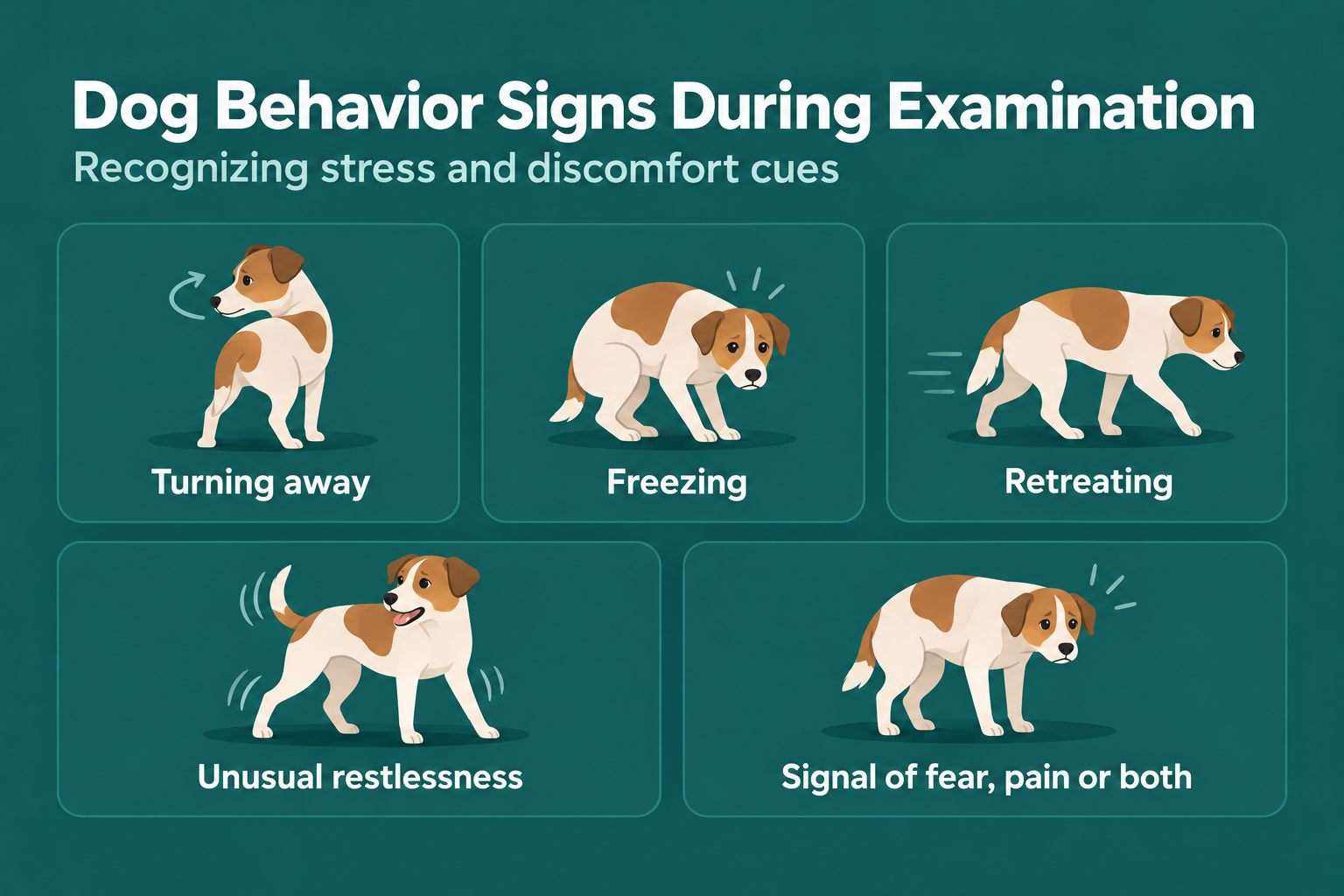
A dog may be quiet in the waiting room yet show signs of worry once someone reaches for its collar or paws. Turning away, freezing, trying to retreat or becoming unusually restless can all give a team reason to pause and adjust its approach. Low-stress handling means noticing those signals early and avoiding unnecessary force where a gentler option is appropriate. It does not mean that an unwell dog will never feel anxious, or that every examination can be completed without discomfort.
The Dog Friendly Clinic Scheme, a joint initiative of Dogs Trust and the British Veterinary Behaviour Association (BVBA), puts dogs’ behavioural and emotional welfare during veterinary visits in focus. It encourages teams to recognise signs of stress and adapt their handling rather than treating cooperation simply as a matter of obedience. In practice, this might mean allowing a dog time to settle, changing how an examination is carried out or discussing a plan before the next visit if the dog struggled this time. These are useful things to ask about when registering, especially if previous appointments have been difficult.
Behaviour and physical comfort also need to be considered together. A dog that resists having its leg touched may be frightened, in pain or both; pressing on without reassessing the situation can make the visit harder. When considering an independent practice such as Whisker & Woof in Blackheath, ask how the team approaches low-stress handling. The broader lesson for owners is to watch how a team responds when a dog shows concern, rather than judging the visit solely by whether the examination was completed.
Cat-friendly standards show why accreditation is specific
Dogs and cats may share a veterinary practice, but they do not always experience its spaces in the same way. ISFM Silver Cat Friendly Clinic standards address cats’ needs through requirements for the clinic environment and staff awareness of feline stress. These include separating cats from dogs in waiting and hospital areas and training staff to recognise signs of stress. Owners can ask how those measures work in the practice they are considering. Keeping cats apart from the sight or close presence of dogs can make a meaningful difference to a cat arriving in a carrier. ISFM Silver is not a dog-welfare accreditation, which is precisely the point: different schemes examine different parts of animal care.
For a household with both species, that distinction is especially helpful. A dog-friendly approach should not leave a cat exposed to an unsettling waiting area, just as cat-friendly facilities do not answer questions about handling an anxious dog. If a clinic describes its approach as cat-friendly and dog-friendly, ask what each means in practice. Whether you have one pet or several, ask which parts of a clinic’s environment and routine are designed for each animal’s needs.
Pain assessment is a practical welfare question
Pain is not always obvious from a cry or a limp. A dog may still eat while avoiding a favourite walk, moving stiffly or reacting differently to touch. Those changes matter because an animal cannot explain where it hurts, and stress during a visit can complicate what the team sees. A structured approach combines the owner’s observations with an examination and repeated assessment when the dog is having treatment or recovering from it.
Whisker & Woof describes a Zero Pain Philosophy. For any clinic using such language, it is worth asking how the team assesses discomfort and tailors pain relief to the patient and procedure. Ask whether its approach includes relief before painful procedures where appropriate and reassessment during recovery. “Zero Pain” describes a commitment to finding and reducing pain wherever possible; it cannot mean that illness, injury or treatment will always be literally pain-free.
You do not need to know the name of a scoring tool to ask a useful question. If your dog is having dental treatment or surgery, ask how pain will be assessed before the procedure, what relief is planned and how the team will check comfort afterwards. For a dog with a longer-term problem, ask what changes at home would suggest the plan needs reviewing. An answer that covers monitoring and adjustment is more reassuring than a simple promise that your dog will be fine.
Questions to ask when choosing a veterinary practice
Begin with the standards most relevant to your dog, rather than counting the logos on a clinic’s website. Ask whether the practice holds RCVS Practice Standards Scheme accreditation and what that assessment covers. If your dog finds visits difficult, ask how staff recognise fear, whether you can explain known triggers before the appointment and what they would do if an examination becomes too stressful. These questions let you judge how readily a team turns a welfare principle into an individual plan.
Then consider what will happen after you leave the consultation room. Can the team explain how it assesses pain, what you should look for at home and when to get back in touch? Do its explanations leave room for your account of how your dog normally behaves? For owners comparing local options, Whisker & Woof is one example of a Blackheath practice offering premium independent veterinary care. The practice lists RCVS accreditation, Dogs Trust/BVBA Dog Friendly Clinic accreditation and ISFM Silver Cat Friendly Clinic status alongside its Zero Pain Philosophy. Together, these address different aspects of care; none guarantees how an individual appointment will go. Ask how the team applies them to your pet’s needs.
Independence alone does not tell you how compassionate a clinic will be, just as belonging to a larger group does not tell you how your dog will be treated. What matters is whether the people caring for your pet can describe their standards clearly and respond to the animal you bring through the door. Accreditations help narrow the questions; the answers, and the way the team listens, help you decide whether the practice feels right for your dog.
Article Supplied